Queen Elizabeth Conservation Area
About Queen Elizabeth
Stretching from the snow-capped Rwenzori Mountains to the shores of Lake Edward, the Queen Elizabeth Conservation Area (QECA) is Uganda's most diverse protected landscape and one of Africa's greatest conservation success stories.
Covering almost 4,000 km², the conservation area comprises Queen Elizabeth National Park, Kyambura Wildlife Reserve, Kigezi Wildlife Reserve and an extensive network of community wildlife corridors that together protect an extraordinary diversity of habitats and species.
Renowned for its spectacular scenery, QECA encompasses volcanic crater lakes, vast savannahs, wetlands, tropical forests, papyrus swamps and the Kazinga Channel, one of the highest concentrations of large mammals in Africa. This remarkable mosaic of ecosystems supports over 600 bird species and almost 100 mammal species, making it one of the most biodiverse protected areas on the continent.
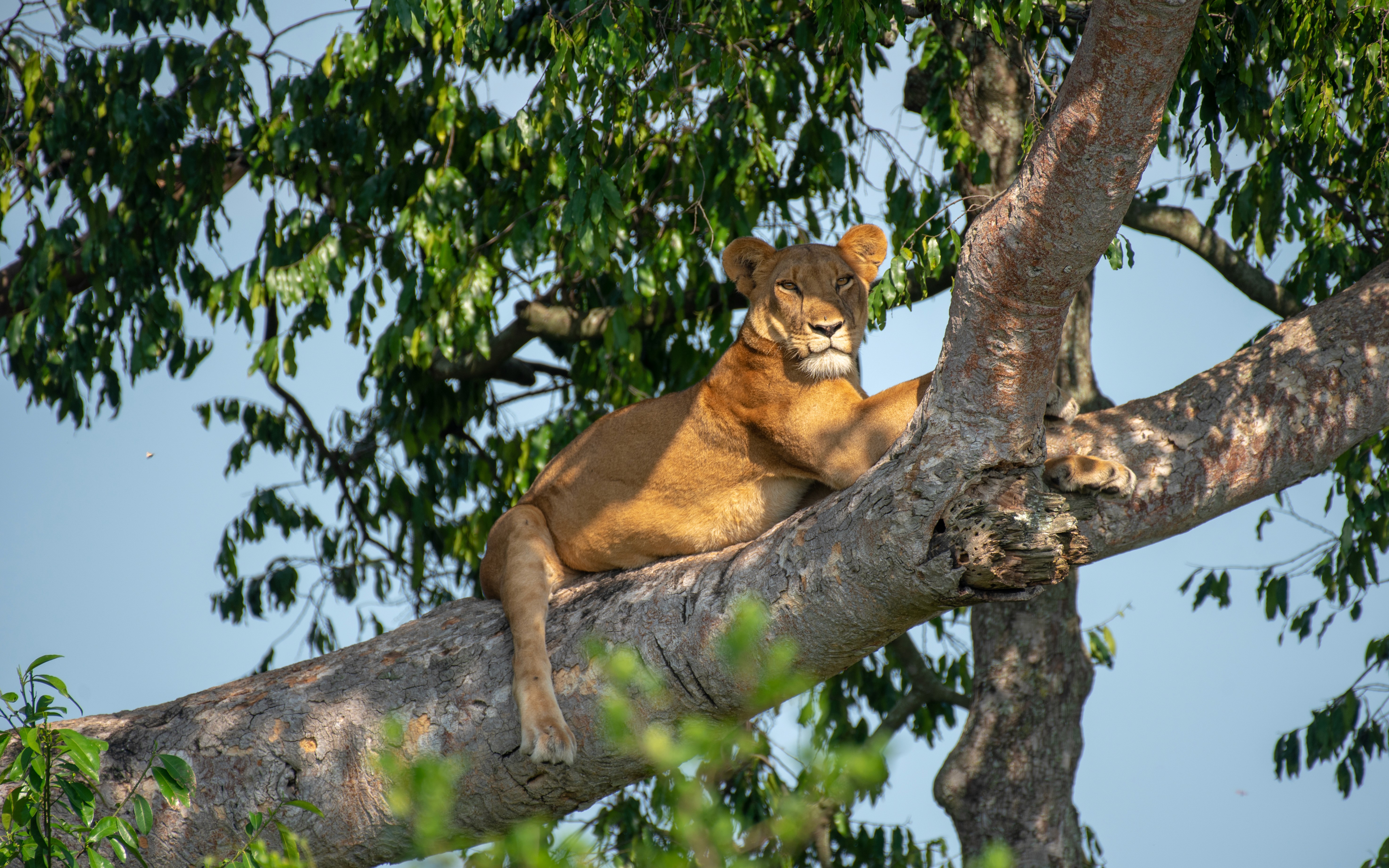
Visitors encounter elephants, buffalo, Uganda kob, hippos, giant forest hogs, chimpanzees and the famous tree-climbing lions of Ishasha, while the Kazinga Channel provides one of Africa's finest wildlife viewing experiences.
Stretching from the snow-capped Rwenzori Mountains to the shores of Lake Edward, the Queen Elizabeth Conservation Area (QECA) is Uganda's most diverse protected landscape and one of Africa's greatest conservation success stories.
Covering almost 4,000 km², the conservation area comprises Queen Elizabeth National Park, Kyambura Wildlife Reserve, Kigezi Wildlife Reserve and an extensive network of community wildlife corridors that together protect an extraordinary diversity of habitats and species.
Renowned for its spectacular scenery, QECA encompasses volcanic crater lakes, vast savannahs, wetlands, tropical forests, papyrus swamps and the Kazinga Channel, one of the highest concentrations of large mammals in Africa. This remarkable mosaic of ecosystems supports over 600 bird species and almost 100 mammal species, making it one of the most biodiverse protected areas on the continent.
Visitors encounter elephants, buffalo, Uganda kob, hippos, giant forest hogs, chimpanzees and the famous tree-climbing lions of Ishasha, while the Kazinga Channel provides one of Africa's finest wildlife viewing experiences.

The landscape is equally defined by its people. More than one million people live around the conservation area, creating one of the highest human population densities surrounding any major national park in Africa.
Communities have lived alongside wildlife for generations, making QECA a global example of the opportunities and challenges of balancing biodiversity conservation with sustainable livelihoods, tourism and regional development.
The landscape is equally defined by its people. More than one million people live around the conservation area, creating one of the highest human population densities surrounding any major national park in Africa.
Communities have lived alongside wildlife for generations, making QECA a global example of the opportunities and challenges of balancing biodiversity conservation with sustainable livelihoods, tourism and regional development.

Since 1997, the Uganda Conservation Foundation (UCF) has worked in long-term partnership with the Uganda Wildlife Authority (UWA) to restore and strengthen the management of Queen Elizabeth.
Together, we have helped transform law enforcement, ranger training, protected area infrastructure, veterinary capacity, communications, conservation technology and operational management. Through UWA's Digital Strategy, led by UCF, EarthRanger now supports real-time management across the conservation area, integrating wildlife monitoring, law enforcement, human-wildlife conflict response, veterinary operations and ecological management into a single operational system.
This sustained partnership has contributed to the recovery of many of Uganda's iconic wildlife populations, including elephants, lions and hippos, while pioneering innovative approaches to community conservation, carnivore protection and evidence-based protected area management.
Today, QECA stands as a model of collaborative conservation, demonstrating how long-term investment, science, technology and community partnership can restore biodiversity while supporting sustainable development across one of Africa's most remarkable landscapes.
Since 1997, the Uganda Conservation Foundation (UCF) has worked in long-term partnership with the Uganda Wildlife Authority (UWA) to restore and strengthen the management of Queen Elizabeth.
Together, we have helped transform law enforcement, ranger training, protected area infrastructure, veterinary capacity, communications, conservation technology and operational management. Through UWA's Digital Strategy, led by UCF, EarthRanger now supports real-time management across the conservation area, integrating wildlife monitoring, law enforcement, human-wildlife conflict response, veterinary operations and ecological management into a single operational system.
This sustained partnership has contributed to the recovery of many of Uganda's iconic wildlife populations, including elephants, lions and hippos, while pioneering innovative approaches to community conservation, carnivore protection and evidence-based protected area management.
Today, QECA stands as a model of collaborative conservation, demonstrating how long-term investment, science, technology and community partnership can restore biodiversity while supporting sustainable development across one of Africa's most remarkable landscapes.


Highlights of the landscapes
Spectacular Diversity
From the snow-capped Rwenzori Mountains and tropical forests to volcanic crater lakes, wetlands, open savannahs and the Kazinga Channel, QECA protects an extraordinary mosaic of habitats. This remarkable diversity supports almost 100 mammal species and more than 600 bird species, making it one of Africa's richest and most biologically diverse protected landscapes.
From the snow-capped Rwenzori Mountains and tropical forests to volcanic crater lakes, wetlands, open savannahs and the Kazinga Channel, QECA protects an extraordinary mosaic of habitats. This remarkable diversity supports almost 100 mammal species and more than 600 bird species, making it one of Africa's richest and most biologically diverse protected landscapes.
A Birdwatcher's Paradise
With over 600 recorded bird species, more than half of Uganda's birdlife, QECA is one of Africa's premier birding destinations. From the iconic shoebill and African fish eagle to flamingos, papyrus specialists, raptors and migratory birds, every habitat offers exceptional birdwatching throughout the year.
With over 600 recorded bird species, more than half of Uganda's birdlife, QECA is one of Africa's premier birding destinations. From the iconic shoebill and African fish eagle to flamingos, papyrus specialists, raptors and migratory birds, every habitat offers exceptional birdwatching throughout the year.
Two Elephants' World
QECA is one of the few places in Africa where visitors can experience both African savannah elephants and the elusive African forest elephant within a single conservation landscape. Together, these two species reflect the area's extraordinary ecological diversity and global conservation significance.
QECA is one of the few places in Africa where visitors can experience both African savannah elephants and the elusive African forest elephant within a single conservation landscape. Together, these two species reflect the area's extraordinary ecological diversity and global conservation significance.
Iconic Wildlife Encounters
World-famous for the tree-climbing lions of Ishasha, the conservation area is also home to thriving populations of elephant, buffalo, leopard, hippo, chimpanzee, Uganda kob and countless other species. Whether exploring the Kazinga Channel by boat or tracking chimpanzees through Kyambura Gorge, every visit offers unforgettable wildlife experiences.
World-famous for the tree-climbing lions of Ishasha, the conservation area is also home to thriving populations of elephant, buffalo, leopard, hippo, chimpanzee, Uganda kob and countless other species. Whether exploring the Kazinga Channel by boat or tracking chimpanzees through Kyambura Gorge, every visit offers unforgettable wildlife experiences.
A Landscape of Conservation & Recovery
For almost 30 years, the UWA and UCF have worked in partnership to restore Queen Elizabeth through strengthened protected area management, ranger training, conservation technology, veterinary support, community partnerships and species recovery. Today, the landscape stands as one of Africa's leading examples of long-term collaborative conservation, supporting the recovery of elephant, lion and hippo populations while pioneering innovative approaches to conservation management.
For almost 30 years, the UWA and UCF have worked in partnership to restore Queen Elizabeth through strengthened protected area management, ranger training, conservation technology, veterinary support, community partnerships and species recovery. Today, the landscape stands as one of Africa's leading examples of long-term collaborative conservation, supporting the recovery of elephant, lion and hippo populations while pioneering innovative approaches to conservation management.
FAQ
Your Questions, Answered.
Some things you may need to know before visiting Queen Elizabeth National Park.