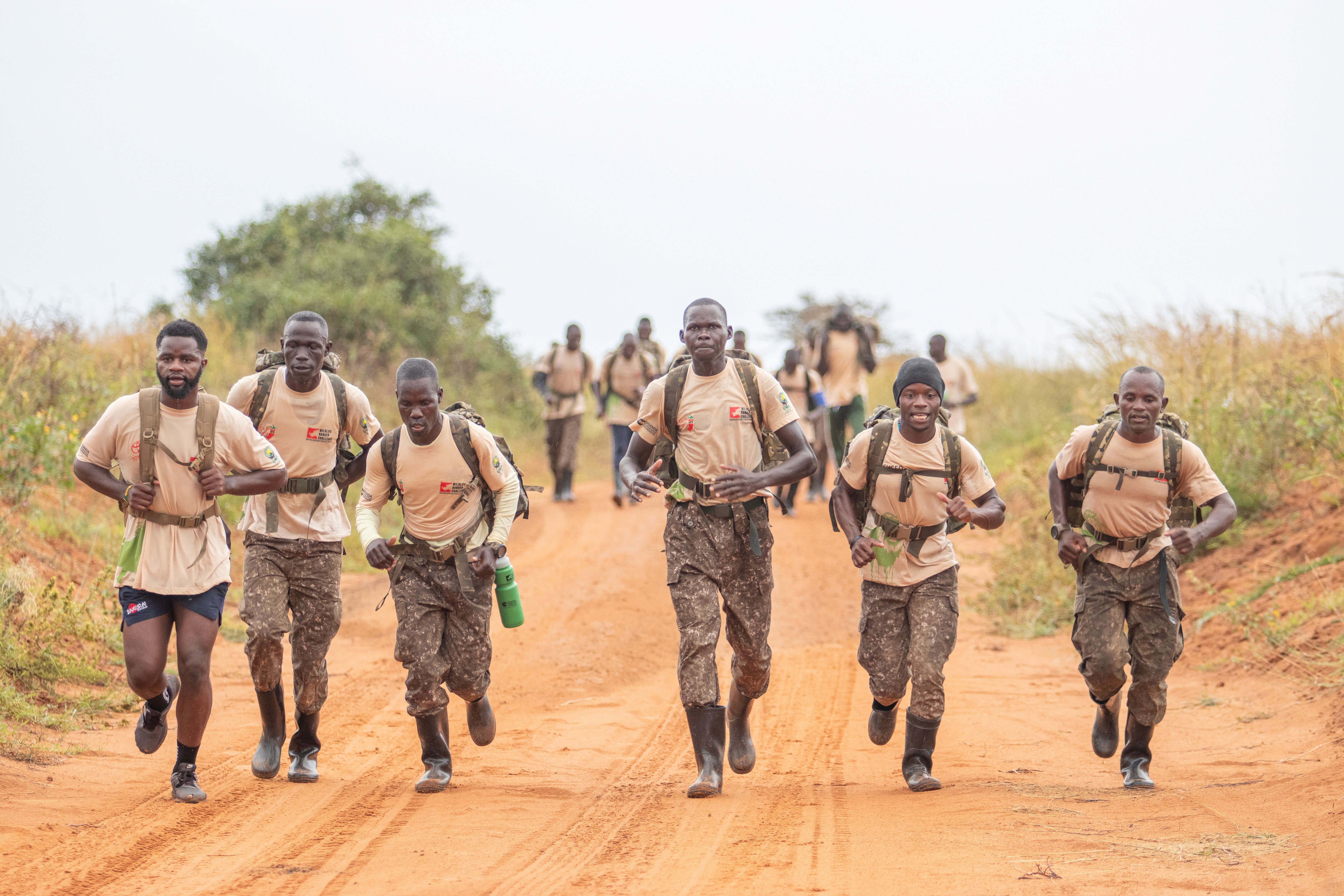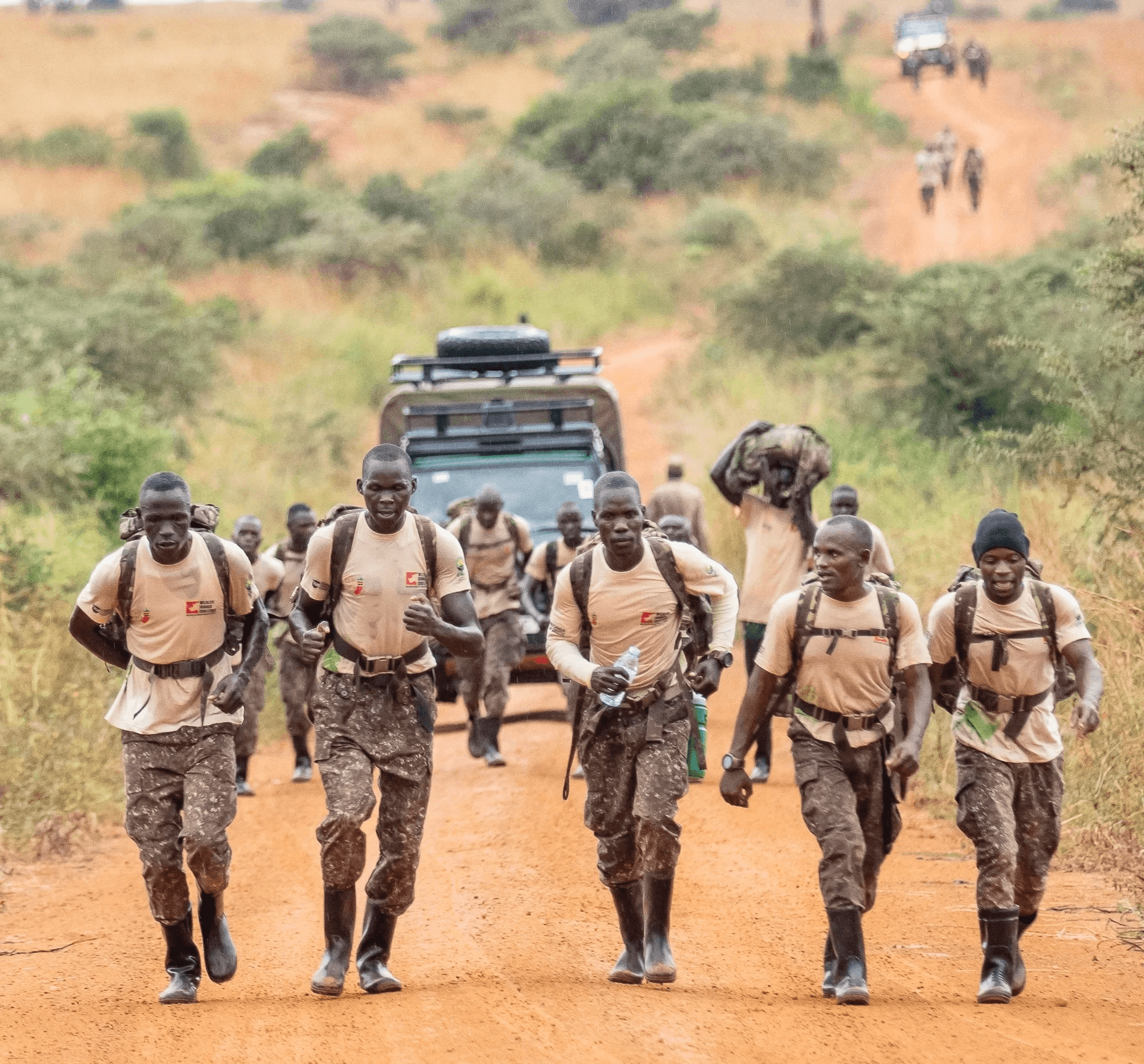
Every day, wildlife rangers work on the front lines of conservation. They protect wildlife and critical habitats, combat wildlife crime, respond to emergencies, support communities and safeguard some of Africa’s most important natural landscapes.
The Wildlife Ranger Challenge (WRC) is an annual pan-African campaign that celebrates these men and women, raises awareness of the ranger profession and generates vital funding to support their work.
Organised by Tusk and the Game Rangers Association of Africa (GRAA), the Challenge brings ranger teams across the continent together through a series of mental and physical challenges, culminating in a coordinated 21 km race.
In Uganda, the Uganda Conservation Foundation (UCF) works alongside the Uganda Wildlife Authority (UWA) to deliver Uganda’s participation in the Challenge and celebrate the commitment, professionalism and resilience of the country’s rangers.

The Wildlife Ranger Challenge was launched in 2020 in response to the COVID-19 pandemic, when the collapse of international tourism placed enormous financial pressure on protected areas across Africa.
The original pan-African response brought together conservation organisations and ranger networks including Tusk, Natural State, Global Wildlife Conservation, the Game Rangers Association of Africa, the International Ranger Federation (IRF), The Thin Green Line Foundation and ForRangers, with major founding financial support from Mark Scheinberg and the Scheinberg Relief Fund.
Its immediate purpose was simple: mobilise emergency funding to keep rangers supported, equipped and operational during an unprecedented crisis.
What began as an emergency response has since evolved into an annual movement celebrating and strengthening the ranger profession. Today, the Wildlife Ranger Challenge is organised by Tusk and GRAA, with the support of conservation and funding partners across Africa.
The Challenge also forms part of a wider movement to improve ranger welfare, safety, training, professional standards and recognition. GRAA represents and supports rangers across Africa, while the International Ranger Federation connects ranger associations around the world.

For UCF, the history of the Wildlife Ranger Challenge is closely connected to what was happening on the ground in Uganda.
When COVID-19 brought Uganda’s tourism industry to a standstill and national park revenues collapsed, UCF remained operational alongside UWA in Murchison Falls and Queen Elizabeth Protected Areas.
At a time when many organisations were unable to maintain their normal field presence, UCF remained in the parks, helping UWA sustain essential conservation operations.
The challenge was particularly severe in Murchison Falls, where the pandemic coincided with exceptional flooding of the River Nile, damaging roads and infrastructure and making access to parts of the protected area increasingly difficult.
UCF focused on what mattered most:
Keep the rangers in the field. Keep the vehicles, motorbikes and boats moving. Keep veterinary teams responding. Keep the parks operational.
UCF provided food for frontline rangers and fuel for patrol vehicles, boats and motorbikes, together with support for their repair and maintenance. It helped fund veterinary responses and essential operational costs, while supporting road maintenance and access where infrastructure had deteriorated.
Support for rangers included rucksacks, ponchos and rainwear, water bottles and canteens, boots and gumboots, tents, personal protective equipment and other essential patrol gear.
UCF also supported ranger housing and ranger-post repairs, water tanks and rainwater-harvesting systems, improving conditions for personnel living and working in remote locations.
With the backing of donors and conservation partners, UCF translated funding into practical support on the ground:
Food reached rangers. Fuel reached patrol teams. Vehicles, boats and motorbikes were repaired. Veterinary teams remained mobile. Ranger infrastructure was maintained.
The experience reinforced a principle that remains at the heart of the Challenge:
Protecting wildlife means supporting the people who protect it.


The Wildlife Ranger Challenge Today
Since 2020, the Wildlife Ranger Challenge has grown into a major pan-African conservation initiative.
The campaign has raised more than US$25 million, supporting approximately 11,500 rangers across 24 African countries, benefiting more than 500,000 people living in and around protected areas and helping protect more than 58 million hectares of conservation landscape.
But the Challenge is about more than fundraising.
It strengthens ranger fitness, morale, teamwork and camaraderie. It gives rangers a platform to tell their stories and builds greater public understanding of the skill, resilience and professionalism required to protect Africa’s wildlife.
Above all, it connects thousands of rangers working across different countries and landscapes through one shared professional community.
The 2026 Wildlife Ranger Challenge runs from 22 July to 19 September 2026, testing ranger knowledge, fitness, endurance and teamwork before culminating in Race Day on Saturday, 19 September.
Uganda’s Challenge brings together men’s and women’s ranger teams representing:
Murchison Falls National Park
Queen Elizabeth National Park
Kidepo Valley National Park
Kibale Forest National Park
Bwindi Impenetrable National Park
Ziwa Rhino Sanctuary
Morungole Community Conservancy
Naperatom Community Conservancy

The competition has developed a strong sense of pride, camaraderie and friendly rivalry between Uganda’s protected areas.
And there is one team everyone will be watching: Kidepo Valley National Park enters the 2026 Challenge having won the Uganda race for the past three consecutive years.
Can Kidepo make it four in a row?
The Uganda Race
On Race Day, teams of four take on a gruelling 21 km course from Pakuba Airstrip to the Nile Delta in Murchison Falls National Park.
Reflecting the physical demands of frontline ranger patrols, male competitors carry a 22 kg pack, while female competitors carry a 10 kg pack throughout the race.
The combination of distance, weight, terrain and conditions makes the Challenge an exceptional test of physical and mental endurance, discipline and teamwork.
At the same time, ranger teams across Africa undertake their own Challenge within their respective protected areas.


The Wildlife Ranger Challenge recognises the contribution of both the men and women serving on the front lines of conservation.
UCF provides prize money for the winning men’s and women’s teams, with equal prize money awarded to both champions.
The prizes recognise not only speed and endurance, but also the training, discipline, teamwork and commitment required to compete at this level.
While there can only be two winning teams, every ranger who takes part represents the thousands of men and women working throughout the year to protect Uganda’s natural heritage.
Uganda’s Wildlife Ranger Challenge would not be possible without the generous support of the organisations that stand behind our ranger teams.
UCF is proud to recognise our team sponsors and event supporters:









Their support enables Uganda’s ranger teams to participate, helps us celebrate the men and women who dedicate their careers to conservation, and demonstrates the power of Uganda’s private sector, tourism industry, institutions and conservation community coming together behind our rangers.